Friday, 10 December 2021

The best home remedies for the flu

The best home remedies for the flu

Many people prefer to turn to home remedies for flu, despite the wide variety of drug products sold for the same purpose. Ingredients such as garlic, honey, and lemon continue to be a good alternative for calming symptoms and speeding up healing. How to use them? What does science say about their properties?
The best home remedies for the flu

Research in recent years has begun to evaluate the real effectiveness of some natural ingredients when it comes to calming symptoms such as nasal congestion, phlegm, and malaise. In case of a cold or flu, we, therefore, recommend that you try one of the following recipes.

5 home remedies for the flu

Often the flu matures with each passing day and improves without the need for specific treatment. However, the symptoms are bothersome and can interrupt daily activities. Therefore, it is always useful to know some home remedies capable of giving relief and well-being. Let's take a look at some traditional, but science-backed recipes.

1. Herbal tea with garlic, honey, and lemon

Garlic has always been one of the main ingredients in home remedies for the flu. According to a study published in Trends in Food Science and Technology, it has immunomodulatory properties that help improve the response against viruses. Indeed, its antiviral potential is recognized.

In this recipe, it is combined with honey and lemon, two equally positive ingredients for the immune system. Honey, in particular, is often used as an adjuvant against symptoms such as cough and irritation of the respiratory tract.

Ingredients

  • 3 cloves of garlic.
  • 1/2 lemon.
  • 1 tablespoon of honey (15 g)
  • 1 cup of water (250 ml).

Method of preparation

  1. To start, mash the garlic cloves and place them in a pot of water.
  2. Boil the mixture for 5 minutes and add the lemon.
  3. Strain the drink and sweeten it with honey.
  4. Consume one cup a day for 3 weeks.

Garlic for the flu.

Garlic
Garlic is a food with antiviral properties. That is why it is often used in flu pictures.

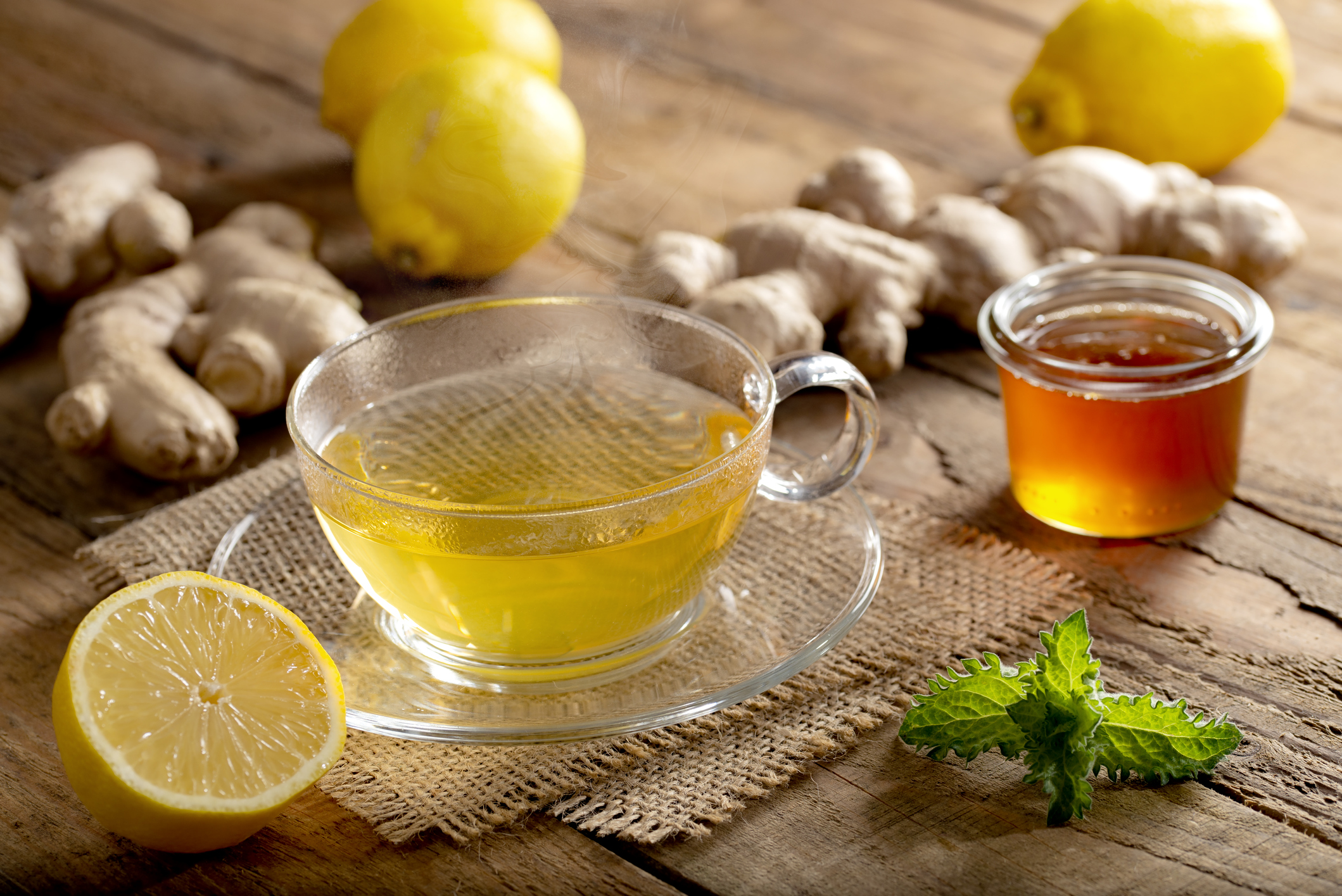
2. Ginger tea

In traditional medicine, fresh ginger is one of the most used ingredients to soothe cold and flu symptoms. According to an article published in the International Journal of Health Sciences (IJHS), its antiviral qualities are largely due to its content of phenolic compounds, such as gingerol. This, among other things, stimulates the body's defenses and reduces fever.

Ingredients

  • Fresh ginger (15 g).
  • 1 tablespoon of honey (10 g)
  • 1 cup of water (250 ml).
  • Lemon (optional)

Method of preparation

  1. First, chop the ginger.
  2. Then add it to a cup of boiling water and let it steep for 10 minutes.
  3. Strain the drink and add the honey and lemon.
  4. Drink a cup 2 or 3 times a day for 2 weeks.

3. Elderberry herbal tea

A recent study published in BMC Complementary Medicine and Therapies points to elderberry as a viable option for treating viral respiratory infections. This is largely due to its anti-inflammatory and antiviral effects. Although more studies are needed, moderate use is considered safe.

Ingredients

  • 2 tablespoons of elderberry leaves (30 g).
  • 1 teaspoon of lime (15 g).
  • 1 cup of water (250 ml).

Preparation

  1. Bring the water to a boil, then add the herbs.
  2. Cover the drink and let it sit for 10 minutes.
  3. After this time, filter through a colander and consume.
  4. Drink one cup every night before going to bed for 2-3 weeks.

4. Aloe vera, lemon, and honey gel

Aloe vera gel is known for its anti-ulcer and cosmetic properties. What many people don't know is that it also acts as an antiviral.

A review published in the journal Molecules supports these effects and explains that they are due to its polysaccharides. In combination with lemon and honey, its effects are enhanced, as well as having a better flavor.

Ingredients

  • 2 tablespoons of aloe vera (30 g).
  • 1 lemon
  • 1 tablespoon of honey (15 g)

Preparation

  1. Add the aloe vera gel to a bowl and mix it with lemon and honey.
  2. If you want a more homogeneous mixture, blend it.
  3. Consume the drink 2 times a day for 3-4 days.

Note: avoid excessive consumption, as it has a laxative effect.

5. Tisana all echinacea

Due to its concentration of flavonoids, echinacea is used as a supplement to promote well-being in the presence of various pathologies. Evidence suggests that it has positive effects in relieving upper respiratory tract infections. Therefore, it is a good remedy for reducing flu symptoms.

Ingredients

  • 1 cup of water (250 ml).
  • 1 tablespoon dried echinacea leaves (10 g).

Preparation

  1. Bring the cup of water to a boil, then add the echinacea and cover. Let it sit for 5-10 minutes.
  2. Filter the drink and drink it.
  3. Drink 2 cups a day for 1 week.

Consumption tips

In general, moderate and occasional consumption of these remedies is considered safe. However, it should be borne in mind that they are not exempt from causing side effects. Therefore, before resorting to a natural treatment it is advisable to inquire about it.

Nor should it be ignored that they may have contraindications and drug interactions. In this sense, if you have a pre-existing disease or if you are taking medications, it is best to ask your doctor.

Monday, 15 November 2021

3 foods to boost the immune system

3 foods to boost the immune system

Diet can improve the function of the immune system, but care must be taken as it can also make it worse. Therefore, it is important to know which foods help to increase the immune defenses, in order to reduce the incidence of infectious diseases caused by microorganisms that circulate in the environment.

3 foods to boost the immune system

At a sporting level, the improvement of the immune function translates into a consequent improvement in performance in the medium term. This is achieved by carrying out the largest number of high-intensity work sessions, without interruptions. It is evident that an adequate diet is essential in all disciplines.

Foods to boost the immune system

In this article we will tell you which are the best foods to increase the immune system. It is recommended that you include them regularly in your diet in order to enjoy their many benefits.

Peppers

Peppers stand out above all for their antioxidant and vitamin C content. This nutrient helps improve the functioning of the immune system, according to research published in the journal Nutrients. High levels of vitamin C in the body are related to a lower risk of developing the common cold, as well as a shorter duration of associated symptoms.

Likewise, the antioxidants contained in peppers help keep inflammation in the body under control. When this mechanism is activated in a functional way, the number of inefficiencies at the organic level is reduced, which has a positive impact on the health of the individual and on the functioning of the immune defenses.

Dried fruit

The dried fruit is very healthy food because it contains protein and unsaturated fatty acids type. Regular consumption of dried fruit is associated with a lower incidence of cardiovascular and inflammatory diseases. In addition, it is rich in micronutrients, in particular iron, calcium and zinc.

The latter has the ability to select the cells of the white series, which are those that contribute to the functioning of the immune system. This is demonstrated by a study published in the journal Nutrients .

This ensures a much more efficient homeostasis and reduces the number of random mutations in the genetic material. Zinc is also able to exert an anti-inflammatory action.

Citrus fruits

Fruit included in the citrus group also has the ability to increase the body's immune defenses. On the one hand, citrus fruits have a significant concentration of vitamin C. On the other hand, citric acid exerts an antimicrobial action thanks to its pH, which allows the destruction of some pathogenic microorganisms that cause health problems.

However, it is important to avoid consuming them in the form of juice, as this wastes most of the nutrients they contain, and the same happens with fiber. Instead of these nutrients, all the simple sugars dissolved in water, too aggressive for the functioning of the pancreas, are consumed .

The juice of citrus fruits has a considerable impact on glycemic levels that can negatively affect metabolic health in the medium term. In short, fruit should always be eaten whole, in a natural way.

Other ways to increase defenses

In addition to emphasizing food intake to increase the defenses we have talked about, it is also essential to take care of other lifestyle habits that can affect its functioning. For example, it is recommended to engage in physical activity on a regular basis, which also allows you to maintain a good state of body composition.

Ensuring adequate rest is also essential. During sleep, many processes of recovery and maintenance of homeostasis take place. When we don't sleep enough hours, the risk of contracting infectious diseases and developing chronic long-term health problems is greater.

Why is including defensive foods in the diet so important?

By regularly introducing foods to increase the immune defenses in the diet, the chances of contracting infectious diseases, i.e. caused by microorganisms, are reduced.

We also recommend avoiding ultra-processed foods rich in simple sugars to keep inflammatory processes under control. In fact, if we don't keep them in check, immune function could be compromised.

Finally, you need to have healthy lifestyle habits, such as exercising regularly and getting enough sleep. Balance in body composition status will also be a key factor if you want to boost your immune defenses.

Sunday, 10 October 2021

How to act if someone who lives in the same house is infected with the coronavirus?

How to act if someone who lives in the same house is infected with the coronavirus?

How to act if someone who lives in the same house is infected with the coronavirus

Covid-19 manifests itself differently in each person. Despite the common early-stage symptoms, usually flu-like, the illness has many ways of developing in the human body. Researchers around the world are seeking to understand how this action is and possible sequelae that may arise in the long term. This is precisely why there is an even greater concern about the spread of the virus. There are still many questions regarding security measures. See some care tips in case any resident of the house is infected by the virus.

All residents of the house must be quarantined

With a high capacity for contamination, some people may have a completely asymptomatic condition, while others may have stronger symptoms. In both situations, the virus can be transmitted. In a pandemic scenario, extra care must be taken to prevent more people from being infected by the virus. If you or a family member have symptoms to any degree or test positive for coronavirus, everyone in the household should be quarantined for at least 14 days—approximate virus incubation period.

The same is true if you have had contact with an infected person, even if you have no symptoms. In this case, it is important that you do not leave the house at all, not even to go to the supermarket or pharmacy, preferring to buy everything by delivery.

Sick person must be isolated in a room

If one of the residents is infected with the coronavirus, he should be isolated to prevent other people in the house from being infected. As already said, it is not worth taking the risk of catching the disease, as it can manifest itself in different ways in each organism. The sick person needs to stay in an airy room with good natural light and just go out to the bathroom (if you have more than one bathroom at home, it's a good idea to reserve one for them). Someone from the house will be responsible for taking food in the isolated room, always wearing a mask and properly sanitizing their hands. The patient should not share personal items with the rest of the house and it is recommended to separate glasses and cutlery during the isolation period .

Extra care to avoid coronavirus contamination among residents

It is not impossible to avoid contamination between residents of the same house, as long as the basic care indicated by the health authorities is respected. The mask is a strong ally in preventing the disease and should be used if there is circulation in common areas of the house, changing it every 3 hours. The item needs to cover the mouth and nose to remain effective. Hugs and close contact between residents should be avoided, especially if there are elderly people and people in the risk group in the same house . In addition, attention to hand hygiene and surfaces such as faucets and doorknobs must be redoubled.

Friday, 1 October 2021

New coronavirus: learn more about masks in children and why use is not indicated until 2 years old

New coronavirus: learn more about masks in children and why use is not indicated until 2 years old

How to use masks on children correctly?

With the coronavirus pandemic, the use of masks became essential to protect against the disease. The mask has the potential to reduce the spread of Covid-19 by up to 40%, according to research bodies, and is the best option against the risk of contamination in situations where there is no possibility of maintaining social isolation. However, the use of masks in children is still controversial: it is recommended that children up to 2 years old do not use the protection, but do you know the reason? Understand about the use of masks in children below!

New coronavirus: recommendation is that masks should not be used by those who cannot remove them

According to Anvisa, the main reason why masks should not be used by children under 2 years of age is that they do not have enough autonomy to remove them and put them on, always needing assistance. In addition to being able to cause suffocation in babies, removal and placement of the mask by adults can further promote contamination . From 2 years of age onwards, it is recommended to teach the child how to put on and remove their own mask, but always under the supervision of an adult.

Covid-19: the ideal use of the mask in children

The mask must not be shared, that is, it must be for individual use. Therefore, children over 2 years old must have their own mask, which obligatorily covers the entire area of ​​the mouth and nose. The non-disposable fabric mask should also be triple layered to prevent droplets of saliva from passing to someone when speaking, coughing or sneezing. The mask must also be soaked after use, in soap and bleach, for at least 30 minutes before the next use.

Children at home are the best option against coronavirus

Ideally, children, whether young or not, only leave the house in case of extreme need . Children under two years old need special attention: in addition to not wearing the mask, their immune system is still developing. In case of a return to day care and school routine, it is recommended to talk to the institution to ensure that all care is being taken.

Saturday, 25 September 2021

Wearables: how this technology is already helping to prevent disease

Wearables: how this technology is already helping to prevent disease

Wearables: how this technology is already helping to prevent disease

Does a small device that fits in your pocket or in the palm of your hand that can help you live a healthier life seem impossible? With the advancement of technology, it's not over! Futuristic news has increasingly helped people's health and, among them, are wearables. Follow the Thousand Care article and understand how this technology is helping to prevent diseases around the world!

What are wearables?

In English, the concept of wearable literally means “wearable”. they are also called “wearable technology”, being smart devices that the user can wear and use as an accessory. The potential of these technologies - which can be developed in both the consumer and healthcare sectors - is virtually infinite.

What are the wearables available on the market today?

Think of a bracelet that allows you to analyze the quality of your sleep , as well as exercise and weight loss habits . Nowadays, some wearables already allow this reality. Others, for example, can calculate the effects of caffeine on your body in particular: you have a cup of coffee and you can monitor in real time the impact of this habit on your body.

In addition, there are already smart clothes that can monitor your movements, heart rate, breathing and other vital signs, and send that information at the same time to computers and smartphones. Despite being a little further from the market, these technologies are effective in preventing some diseases.

What are the benefits of wearables for users?

One of the biggest advantages of wearables is the incentive to practice physical activities . Exercising tends to become customary with the use of wearable devices. Getting interesting information about your walking, cycling, or other exercise helps you gauge your performance and the benefits of that activity.

However, it is important to remember that wearable technology should not replace a consultation with a healthcare professional. Wearables arrived to help control some indexes on a daily basis, in order to avoid illnesses or reduce the frequency of visits to the emergency room.

Brand Box